
It’s a Mathematical Certainty: Short-Term Politics Cannot Defeat Long-Term Power
The fight for democracy will not be won in a single election cycle.

Democracy as we have known it will cease to exist unless Democrats and their supporters pursue a different, more expansive strategic approach. The 2026 cycle is important — as is 2028. Each cycle is. What is lacking is a strategy that understands how to build power for the long term and create generational change.
Our work must adopt a 2032 lens, given that the country’s political makeup will be changed substantially after the 2030 census — impacting every state legislative and Congressional district, as well as the Electoral College. This calls for a different, strategic frame and different types of investments.
Five major forces are coalescing to threaten the future of our country:
1. America’s Changing Demographic and Geographic Makeup
America is rapidly diversifying from a majority white Christian population to a more racially and religiously diverse nation. Along with these demographic changes are geographic ones. The next census will record larger populations and result in more districts being drawn in the South and West. Arizona, Florida, Georgia, North Carolina, Texas, Utah and possibly Idaho are all expected to gain seats.

2. Different Investment Strategies Between the Right and Progressives and Democrats
Democratic money is structurally optimized for campaigns, while Republican money is structurally optimized for infrastructure. Electoral victories for Republicans are the result of long-term, strategic, institutional investments. Their investments are focused on long-term power-building. The Democratic strategy has involved a cycle-to-cycle reset that treats elections as the end goal. This shortsightedness has played a major role in undermining our multiracial democracy.
3. The Right’s Strategic Takeover of the Courts
In 1980, Michael J. Horowitz, a conservative lawyer, wrote a report commissioned by the Scaife Foundation arguing that conservatives need to do more than fund litigation. They needed to build a pipeline to cultivate conservative ideas on elite law school campuses, identify and credential young conservative lawyers, and create the institutional infrastructure to place them throughout the legal profession and federal and state benches.
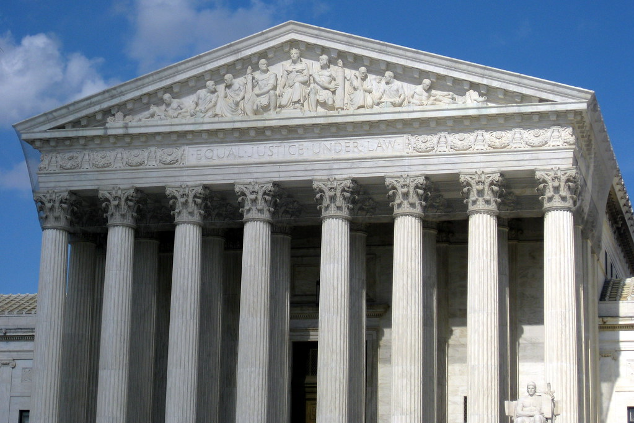
Right-wing political operatives and institutions, including the Federalist Society, strategized to elect and or appoint conservative ideologue judges to state supreme courts and the U.S. Supreme Court. Today, six of the nine justices on the U.S. Supreme Court have ties to the Federalist Society.
These appointments have operated as a wrecking ball to our democracy. The most recent decision of Louisiana v. Callais is a nail in the coffin of the highly effective 1965 Voting Rights Act. These decisions were the return on investment for those who invested in the Federalist Society and state supreme court races to advance conservative ideologies and stop decades of work to expand the rights of individuals and communities.
4. The Right’s 50-Plus-Year Campaign to Control State Legislatures
The work to invest in state legislative bodies as a center of power began in the 1970s and 1980s. The strategy reached a watershed moment in 2010 with the creation of REDMAP, which netted approximately 680 state legislative seats across the United States. Republican wins in state legislatures included a number of trifectas and super-majorities that thwarted Democratic governors and Democrats in Congress for decades.
As a counterpart, the Democratic Legislative Campaign Committee was founded in 1992 but was underfunded and almost irrelevant until the 2020s. As in other arenas, Democrats are playing a game of catch-up.
5. Right-Wing Narrative Dominance
The Right’s investments in narrative dominance through universities, media, think tanks, mega churches and business societies were sparked in 1971 by the Powell Memo, then spread to the judiciary as a result of the Horowitz Report in 1980.
Systematic media ownership as a strategy to influence attitudes, control the political narrative and impact electoral choices began in the 1970s with Rupert Murdoch. Another early player was the Sinclair Group. Their strategy was to buy up local TV stations across the country and centralize conservative-leaning content (including mandatory “must-run” segments) across hundreds of local affiliates.
The result of these ever-expanding efforts has been to provide everyday Americans a narrative that explains their lives, identifies who is to blame for their struggles, fosters distrust in the public sector and promotes a zero-sum game mentality. These narratives are designed to promote fear, polarization, racial animus and an “us versus them” view of the world.
The Future Needs to be Re-Imagined and Investment Strategies Changed
The Callais decision should be a wake-up call, forcing those who care about our constitutional democracy to rework strategic planning with a longer timeline. The aggressive redistricting mid-census is accelerating an effort to lock in an overwhelming structural advantage for Republicans, not only in 2026, but more importantly, in 2028 and through 2032. Again, this does not negate the fact that 2026 and 2028 are important election cycles, but they are short-term milestones; if we don’t focus on the future, we lose it all.
There is no way to out-organize these structural advantages in the short term. Democrats may out-raise Republicans and take back the House — and maybe the Senate — in 2026, but they will face a changed country and different electoral calculations in 2028. The 2030 census will only make matters worse. There needs to be an ongoing effort that includes around-the-clock organizing, creates community and comity, and fights for the definition of how Americans understand their lives.
An Effort to Restore and Expand Basic Rights Starts in the States
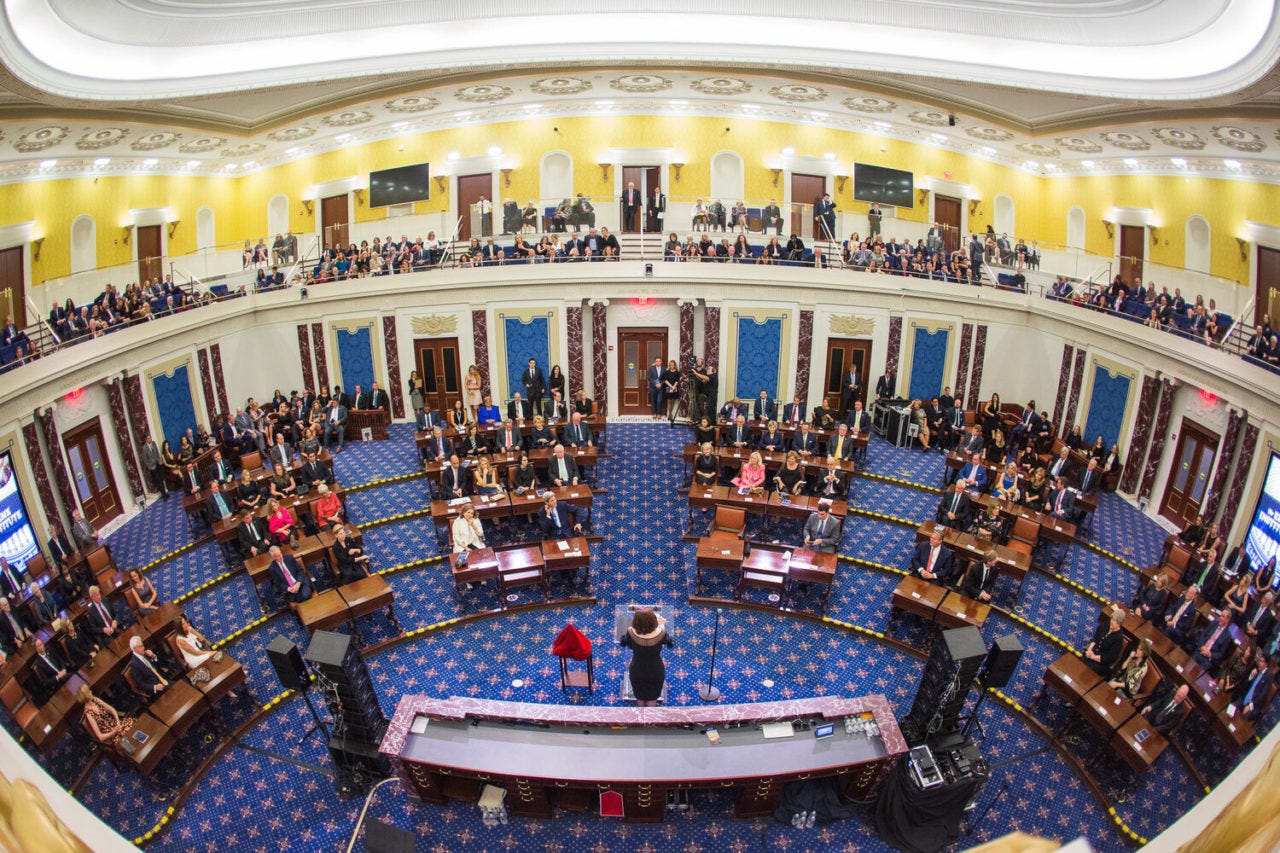
State legislatures are the centers of power now. A coordinated, new strategic approach that focuses on state legislatures and the future control of the levers of government is required. There are three cycles and five months to begin a comprehensive effort that would include different segments of the progressive infrastructure. The groundwork for this effort would start now and increase in intensity in 2028, 2030 and 2032.
To be the most effective, each state needs its own investment strategy that is comprehensive and inclusive of candidate recruitment, electoral strategy, around-the-clock media strategies, community building, funding security, and the professionalization and secure funding of state organizations.
There are only a small number of national organizations and a mixture of state groups that focus on state legislatures. These need funding, but so do new efforts. Funders must invest in 2026, but invest in ways that create multi-faceted plans and strategies that go through 2032.
Currently, there are 28 state legislatures under full Republican control, 18 under full Democratic control and four have split control. There are 23 Republican trifectas (governor plus both legislative chambers), 16 Democratic trifectas and 11 states with divided government.
The ability to secure a House majority and the White House begins in state legislatures, governors’ mansions and the ability to change hearts and minds.
Recommendation: An Integrated Program Up and Down the Ballot
A 2032-specific fund should be established and given the necessary billions to wage a multi-cycle and multi-faceted campaign that unites efforts and results in an integrated, values-based political and policy strategy.
No single group should feel that this effort shortchanges their own ability to raise the funds they need. Every cycle is “the most important.” The one-cycle frame needs to change to — at the very least — the next four cycles.
The foundational purpose of all these efforts is policy change. Policy change requires a new distribution of power. This should result in policies that make the lives of Americans better, more rewarding and affordable while removing the punitive policies that have been put in place that make it difficult for individuals to access needed services.
Americans yearn for elected officials who are committed to real policy changes that meet the needs of ordinary Americans and who are not beholden to corporate dollars or individual large donors with their own agendas.
Americans are hungry for community. Americans are hungry for bravery.
If we fail to act, the country will continue to diversify, but its leaders will not. As Americans become more tolerant of differences, the opposite will be true of their elected leaders. The rights of Americans will diminish, and wealth inequality will continue to increase.
There are two important steps. One is to recognize the need for a comprehensive plan through 2032, combined with an aspirational policy agenda. The second step is to appreciate the resources required to achieve our goals. The crisis in which we find ourselves demands new and longer-term strategies, new thinking and secure resources.
This is the piece that puts everything in context. 2026 matters — and so do 2028, 2030, and 2032. The right has been playing a 50-year game. We cannot keep playing cycle to cycle and expect different results. State legislatures. The courts. Narrative. Infrastructure. This is the map. Read it and think bigger. Let's get it done!